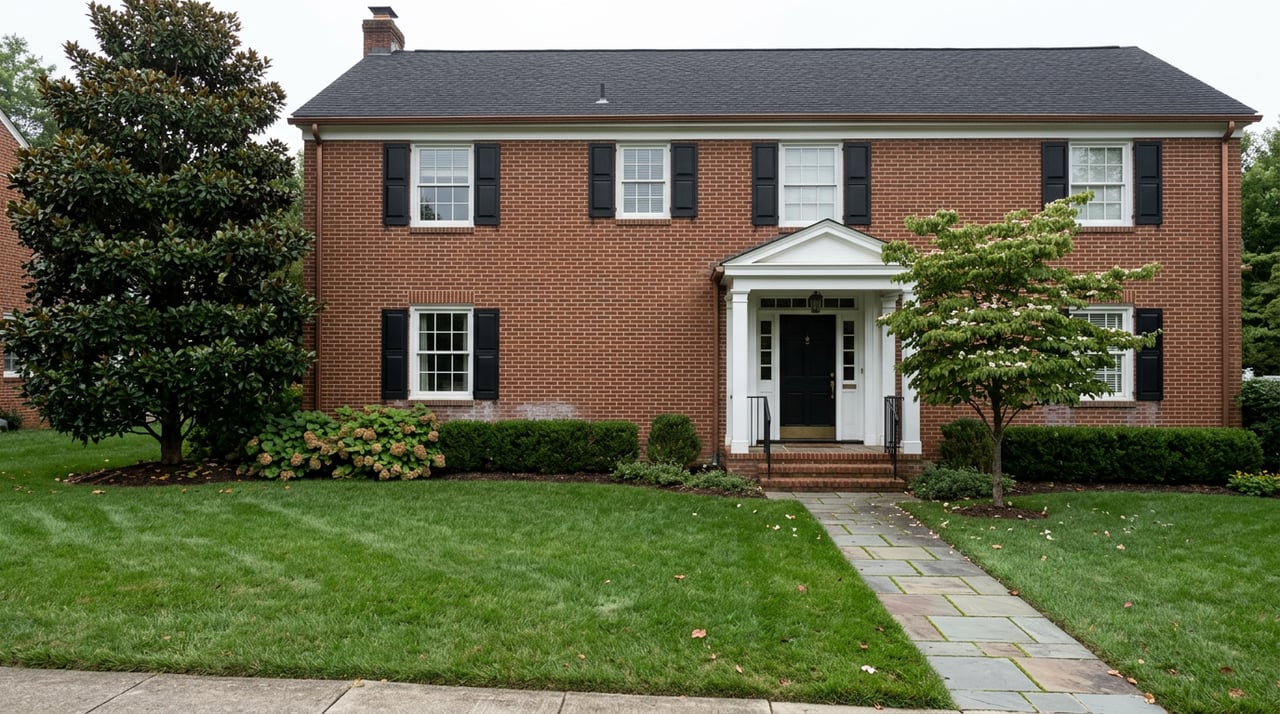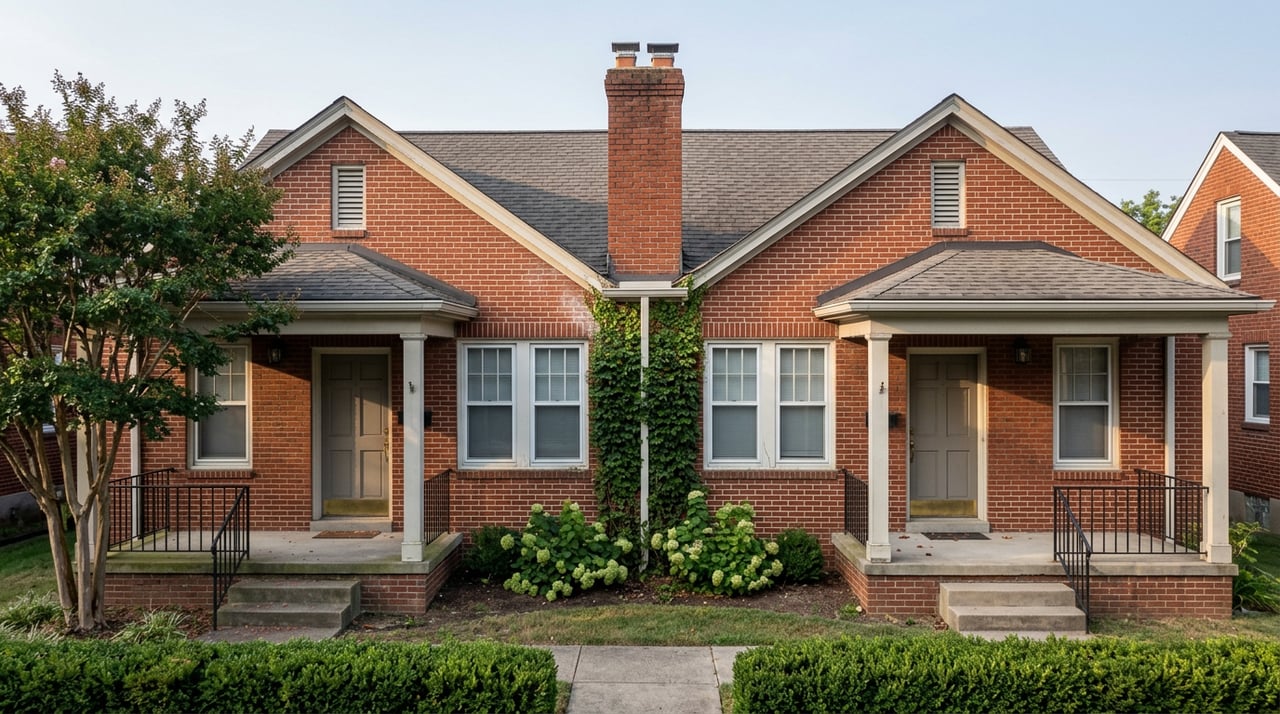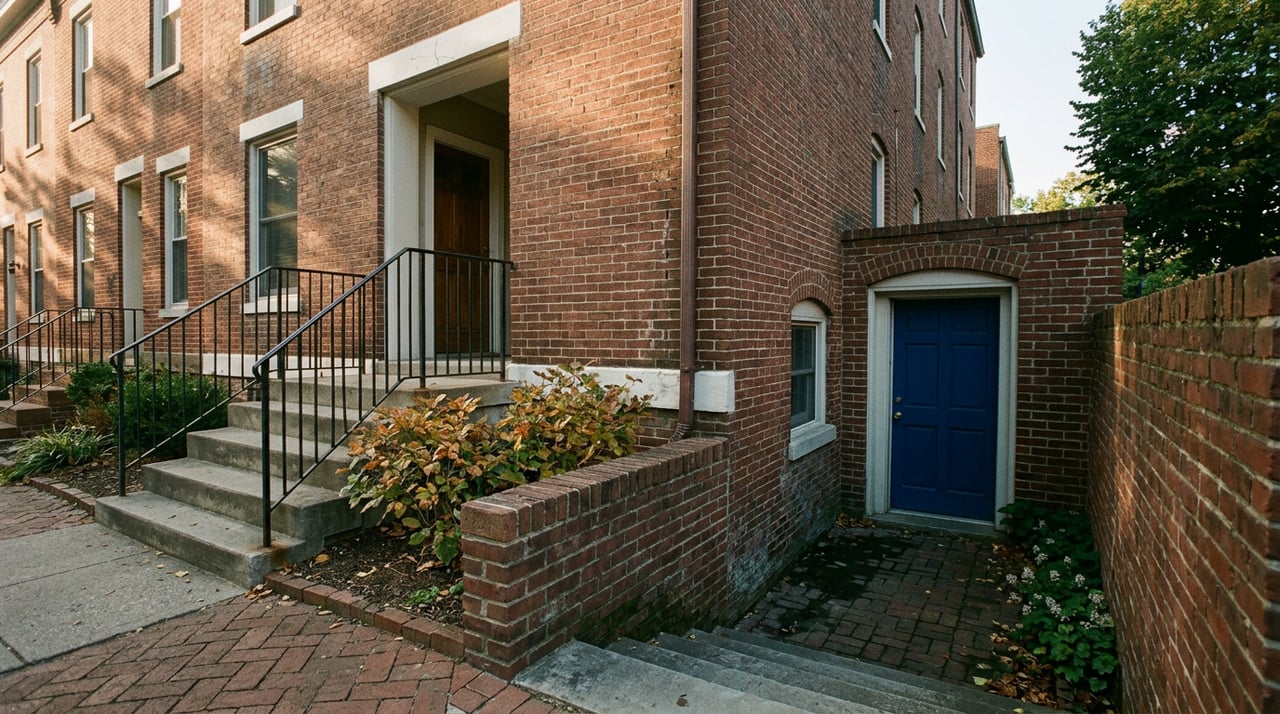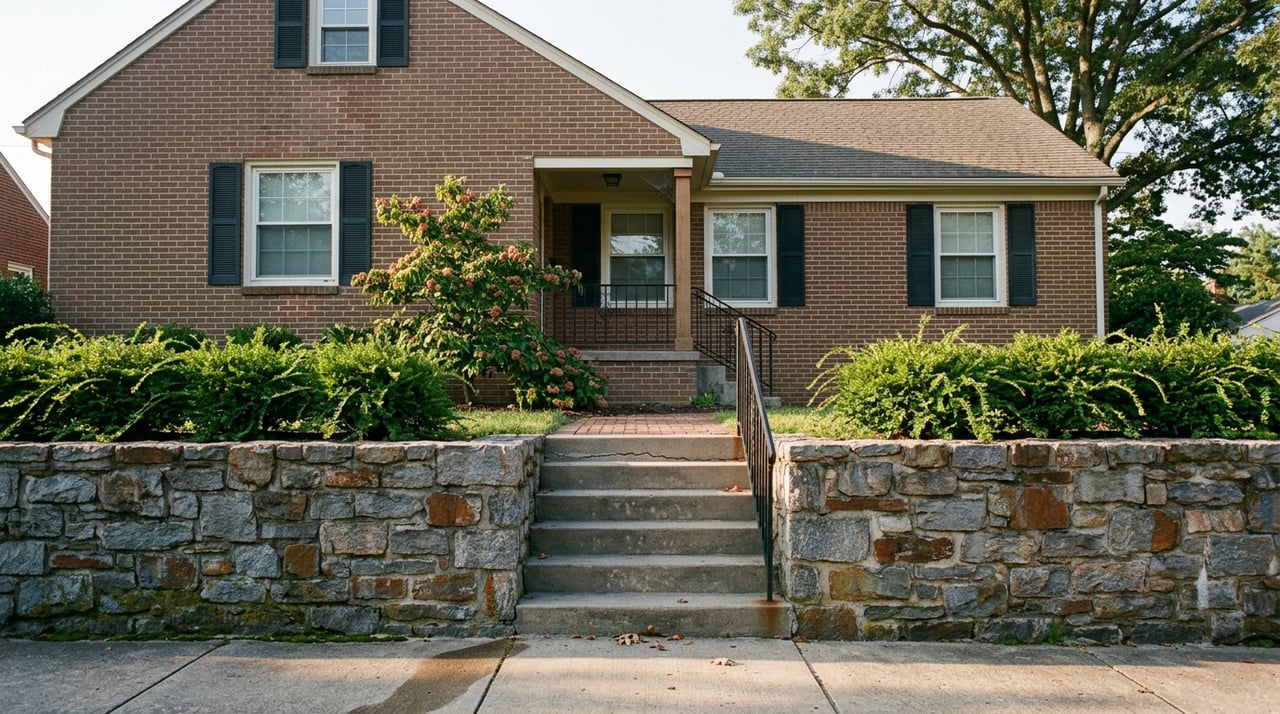
Search "Lanham, MD homes for sale" and two listings might land on the same page. One is a Stanley Martin-built townhome on Jim Lovell Lane, more than 2,700 square feet, soaring ceilings, an open-concept kitchen built for entertaining. The other is a vacant, fire-damaged shell a few miles away, sold through an online bidding platform with a suggested opening bid and a five-figure deposit required just to place a bid. Both carry the same city name. Neither one is what the median price tells you Lanham looks like.
That gap is the story. Lanham's numbers aren't describing one market slowing down or heating up. They're describing two markets that happen to share a zip code, and the blended average is starting to produce results that don't make sense until you split them apart.
One Name, Two Data Sets
Pull Lanham's citywide numbers from Redfin and you'll see the median sale price at $499,000 in December 2025, up 10.2% from the year before. Pull the same company's neighborhood-level breakout, a tighter boundary Redfin tracks separately from the broader zip code, and the median sale price actually fell 12.6% over that same year, even as the price per square foot rose 29.6%.
Read that twice. The same data provider, looking at overlapping ground, produced a rising median in one view and a falling median in the other, while the per-square-foot rate went up sharply in the shrinking-median version. The only way both are true is if the mix of homes trading inside that tighter boundary shifted toward smaller properties that still command a premium rate per foot, while the broader zip code average got pulled up by something else entirely: bigger, newer, or more heavily renovated homes closing at higher total prices.
Neither number is wrong. Neither one is the whole picture. A median price is a single line drawn through a pile of very different transactions, and in Lanham that pile currently contains a lot more variety than the headline figure lets on.
Why Slower and Busier Aren't Opposites
Here's the pattern that should catch a buyer's attention. Movoto's data shows 102 homes sold in Lanham in June 2026, up from 91 in June 2025. Sales volume climbed. At the same time, the average days on market stretched from 28 days to 46. Normally those two numbers move against each other. More buyers competing for a similar pool of listings should chew through inventory faster, not slower.
The math only works if a growing share of that added volume is coming from listings that take longer to close, even while continuing to count as sales. Homes.com puts Lanham's typical time-to-sale at 34 days over roughly the same window, a noticeably shorter figure than Movoto's 46. The two trackers don't agree on the exact number, which is normal since every platform counts "days on market" a little differently, but they agree on direction: something is stretching Lanham's sales cycle even as the transaction count grows.
The likeliest explanation, and the one the listing data backs up directly, is that Lanham's sales column now includes a steady stream of as-is, auction-marketed properties layered on top of the usual conventional-financing traffic. Those sales still close. They just close on a slower, more procedural timeline than a move-in-ready townhome under contract in three weeks.
The Pipeline Nobody Puts in the Listing Photo
Look past the standard MLS remarks and Lanham's inventory has included, within the same recent stretch, at least three separate properties auctioned through the Ashland Auction Group's online bidding platform. One was a vacant fire-damaged shell requiring a complete renovation, with a $7,500 deposit and a bidding window that opened and closed inside 48 hours. Another, a one-story detached home near Glenn Dale Park and Vista Gardens Marketplace, required a $30,000 deposit with occupancy status listed as unknown at the time of bidding. A third, a single-family property near New Carrollton and Seabrook, close to NASA Goddard Space Flight Center and the Seabrook MARC station, carried a $40,000 deposit and was believed to be occupied.
A separate New Carrollton listing was marketed through Xome's auction platform with a 5% buyer's premium layered on top of the winning bid, a cost that doesn't show up in the headline sale price at all. Zoom out to the rest of Prince George's County and the pattern repeats: Alex Cooper Auctioneers has handled a brick porch-front rancher in Capitol Heights the same way. This isn't a Lanham quirk so much as a Lanham example of something happening across the county's older housing stock.
None of that shows up when a portal reports a single median for "Lanham, MD." It shows up when you start noticing how many listings mention a suggested opening bid instead of a list price.
The Age of the Housing Stock Is the Actual Driver
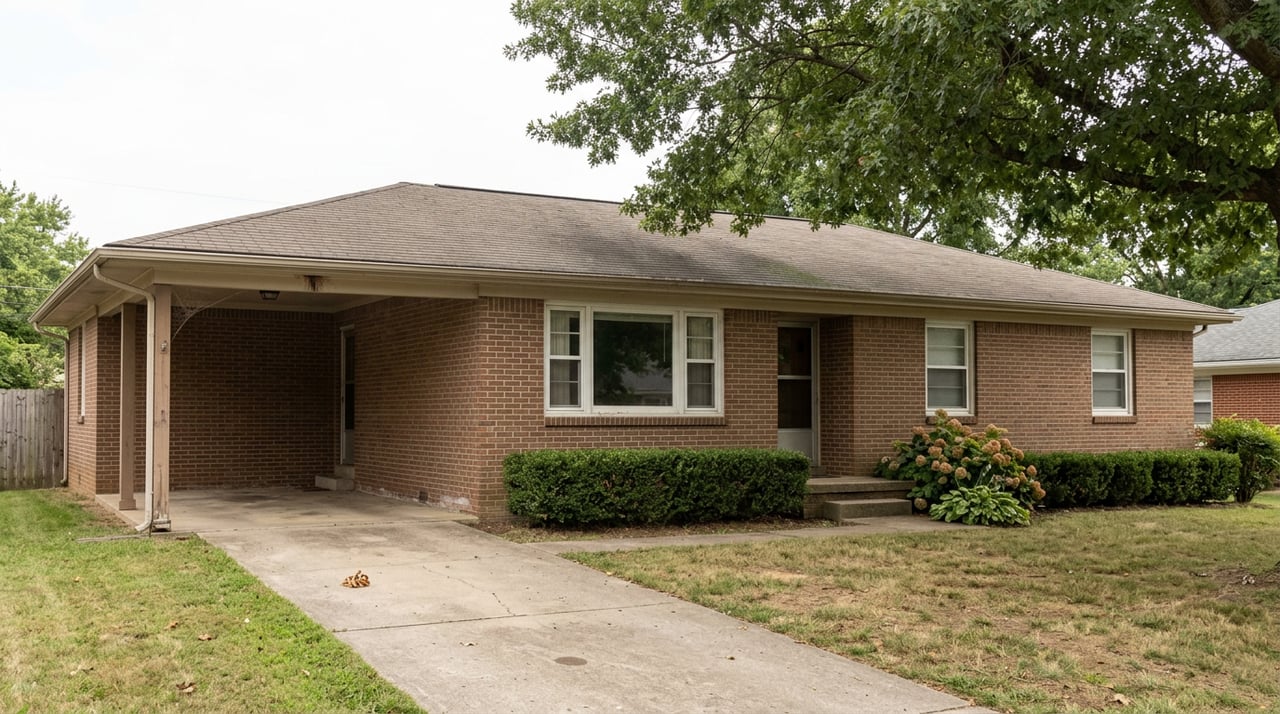
There's a structural reason Lanham keeps producing this particular mix of inventory. According to NeighborhoodScout's analysis of Lanham real estate, 43.76% of the town's housing was built between the 1940s and the 1960s, the postwar wave of capes and ranchers built for a growing middle class. That's the housing stock now reaching the point where original systems, roofs, and finishes are due for replacement all at once, which is exactly the profile that tends to end up marketed as-is rather than staged and listed conventionally.
That same stretch of decades explains why the fast lane exists right alongside it. Builders and renovators are actively working newer product into the same zip code, from the Stanley Martin townhome on Jim Lovell Lane to a fully renovated interior row townhouse in the Cipriano Woods community with new vinyl flooring, three new bathrooms, and a fully finished basement, to a New Carrollton rambler renovated in 2026 with cherry cabinets and granite counters and a roof already replaced back in 2021. Two eras of construction, trading in the same market, at the same time.
Two Lanhams at a glance
| Fast lane | Slow lane | |
|---|---|---|
| Typical product | New construction or recently renovated flip | Original-condition postwar home or storm/fire-damaged property |
| Marketing channel | Conventional MLS listing | Online auction platform, deposit required to bid |
| Buyer profile | Owner-occupant with financing | Investor or cash buyer comfortable with as-is risk |
| Closing timeline | Weeks | Longer, often with occupancy or title steps to clear |
What This Means If You're the One Reading the Median
If you're comparing Lanham to other Prince George's County neighborhoods on a spreadsheet, the median price alone won't tell you which of these two markets you're actually pricing against. Before treating any headline number as gospel, it's worth asking which boundary the source is using, whether the reported days-on-market includes auction listings at all, and what the per-square-foot rate looks like next to the total price, since Lanham's own numbers show those two figures can point in opposite directions.
If you're the one considering bidding on an auction property, a few details matter more than the suggested opening bid itself. That figure is a floor, not a ceiling, and deposits on the Lanham listings above ranged from $7,500 to $40,000 just to participate. A buyer's premium, where it applies, adds cost on top of the winning bid. Maryland's foreclosure process, as iBuyer explains, runs through the courts rather than outside them, which is part of why occupancy status shows up as "unknown" on some of these listings. Maryland law also generally still requires sellers to provide either a disclosure statement or a disclaimer statement even on an as-is sale, so "as-is" describes the condition of the house, not an exemption from paperwork.
If you own one of Lanham's original postwar homes and you're weighing whether to list it conventionally or explore a faster exit, that decision hinges on the same split this data reveals. A property in solid, updated condition competes in the fast lane. One with deferred maintenance or complications tends to get pulled toward the slow lane whether you plan for it or not, which is exactly the kind of situation where a second opinion on positioning and pricing is worth getting before you list.
A Few Questions This Raises
Does winning an auction always mean paying less than a comparable conventional listing? Not necessarily. The opening bid is a starting point, and any buyer's premium is added after bidding closes, so the effective price can land close to or above what a similar property would fetch through a standard listing.
Is a lower price per square foot always the better value? Not on its own. Lanham's own data shows a segment where the median price fell while the price per square foot rose, meaning smaller or original-condition homes were doing the trading. Compare like to like on size and condition, not just the rate.
Should I still get an inspection on an auction property? Yes, whenever the auction terms allow a pre-bid inspection. As-is sales limit your ability to negotiate repairs after the fact, so knowing what you're bidding on matters more, not less.
Lanham's numbers only look contradictory until you separate what's actually trading. Once you do, the market makes a lot more sense, and so does your next move in it.
If you're trying to figure out which side of Lanham's market a specific property sits on, or you're weighing how to position an older home for sale, Anthony Beharry has spent more than two decades working exactly this kind of question across Prince George's County. Explore the Lanham neighborhood page, check your own home's standing with a free home valuation, or reach out directly. Let's Connect.
This article is general information, not legal, tax or financial advice. Consult a qualified professional about your situation.